RICINOLEIC ACID |
PARAMETERS | SPECIFICATIONS |
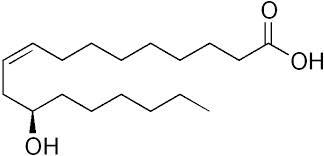
Synonyms | 12-Hydroxy-Cis-9-Octadecenoic Acid |
CAS No | 141-22-0 |
Formula | C18H34O3 |
Mol. Wt | 298.35 |
Description | Clear Slightly Hazy Pale Yellow Liquid at 25o C |
Color | 8 Gardner Max |
Acid Value | 26 Max |
Hydroxyl Value | 28 Max |
| Packaging | The material will be packed in plastic open mouth drums with ring and lid, with poly bags on the inside, of Net 30 KGS each. |
(NOTE: WE CAN PROVIDE MORE BETTER SPECIFICATION OF RICINOLEIC ACID AS PER PARTY'S REQUIREMENT.)
Acme Synthetic Chemicals is the Manufacturer, Supplier & Exporter of Ricinoleic Acid which is classified under CAS NO.141-22-0.
Ricinoleic Acid - Lubricant (CAS No.141-22-0) is also known as 12-hydroxy-9-cis-octadecenoic acid.
Acme Synthetic Chemicals is one of the reputed organizations engaged in providing superior quality Ricinoleic Acid - Lubricant (CAS No.141-22-0, 12-hydroxy-9-cis-octadecenoic acid) to our esteemed clients.
Ricinoleic Acid - Lubricant (CAS No.141-22-0, 12-hydroxy-9-cis-octadecenoic acid) is an unsaturated omega-9 fatty acid that naturally occurs in mature Castor plant (Ricinus communis L., Euphorbiaceae) seeds.
Ricinoleic Acid - Lubricant (CAS No.141-22-0, 12-hydroxy-9-cis-octadecenoic acid) is the active component of castor oil.
Ricinoleic Acid - Lubricant (CAS No.141-22-0, 12-hydroxy-9-cis-octadecenoic acid) is prepared by the hydrolysis of Castor Oil.It is used in textile finishing, in coating, inks and in making soaps.
Ricinoleic Acid - Lubricant (CAS No.141-22-0, 12-hydroxy-9-cis-octadecenoic acid) is used to manufacture Poly Glyceryl Poly Ricinoleate (PGPR) a key ingredient in chocolate products.
Ricinoleic Acid - Lubricant (CAS No.141-22-0, 12-hydroxy-9-cis-octadecenoic acid) is used for the treatment of leather.
Ricinoleic Acid - Lubricant (CAS No.141-22-0, 12-hydroxy-9-cis-octadecenoic acid) provides good wetting, flexibility and softening property to leather.
Ricinoleic Acid - Lubricant (CAS No.141-22-0, 12-hydroxy-9-cis-octadecenoic acid) contains antimicrobial properties, which, when applied to open wounds, can act as a disinfectant.
Ricinoleic Acid - Lubricant (CAS No.141-22-0, 12-hydroxy-9-cis-octadecenoic acid) is effective for treating fungal skin infections, such as ringworm, as well as minor cuts and scratches.
The offered product Ricinoleic Acid - Lubricant (CAS No.141-22-0, 12-hydroxy-9-cis-octadecenoic acid) is formulated using supreme class ingredients and modern techniques by our team of skilled professionals as per the set industry norms at our state-of-the-art processing unit.
This Ricinoleic Acid - Lubricant (CAS No.141-22-0, 12-hydroxy-9-cis-octadecenoic acid) is widely demanded in the international market due to its high effectively, eco-friendliness & purity, and is offered in different grades to meet the varied needs of our clients. Moreover, we are offering the entire range at an affordable cost to our clients.
Designed for industrial and automotive applications, Ricinoleic Acid Lubricant delivers reliable performance in machinery, processing equipment, and specialty uses. Its high purity and steady viscosity ensure optimum lubrication, surface protection, and compatibility with plastic and metalworking processes. The product excels as a base for specialty greases and extends service intervals by resisting high temperature fluctuations and oxidation.
Sourced from vegetable-based oil, ricinoleic acid is not only biodegradable but also safe for both users and the environment. Perfect for industries seeking sustainability without compromising operational efficiency. Its low water and ash content guarantees minimal residue and optimal equipment function over extended periods.
Ricinoleic Acid Lubricant is available in standard size drums (50 kg / 200 kg) with packaging designed for safe bulk storage and transportation. Its stability under a wide range of operating temperatures (-10C to 80C) and protection against degradation (when stored in a cool, dry location away from sunlight) ensures a shelf life of up to two years.
FAQs of Ricinoleic Acid - Lubricant:
Q: How is Ricinoleic Acid Lubricant applied in industrial settings?
A: Ricinoleic Acid Lubricant can be directly used for machinery lubrication, surface protection, or as a base for specialty greases in processing equipment. It is typically introduced into lubrication systems by conventional means, ensuring consistent protection and smooth operation.
Q: What benefits does this lubricant offer over conventional mineral-based oils?
A: Being vegetable-based and readily biodegradable, Ricinoleic Acid Lubricant offers environmental advantages, stable viscosity, and resistance to oxidation at high temperatures. It reduces residue due to low water and ash content, making it reliable for extended machinery life and clean operation.
Q: When should Ricinoleic Acid Lubricant be used for optimal performance?
A: For optimal results, use the lubricant within its two-year shelf life, under operating temperatures from -10C to 80C. Ensure the product is stored correctly in sealed drums to maintain purity and effectiveness.
Q: Where can Ricinoleic Acid Lubricant be stored safely?
A: Store Ricinoleic Acid Lubricant in a cool, dry place, away from direct sunlight and heat sources, in its original sealed drum or bulk container. Proper storage prevents degradation and preserves product quality.
Q: What is the process for handling and packaging Ricinoleic Acid Lubricant?
A: The lubricant is supplied in sealed drums of 50 kg or 200 kg, designed for bulk handling and easy transport. During packaging, care is taken to minimize exposure to moisture and contaminants.
Q: How is Ricinoleic Acid Lubricant used in grease formulation?
A: Its high purity and stable chemical composition make Ricinoleic Acid an exceptional base for specialty greases, providing consistency, longevity, and improved performance for demanding industrial applications.
Q: What industries benefit most from Ricinoleic Acid Lubricant?
A: Industries such as automotive, metalworking, plastics manufacturing, and cosmetics find this lubricant valuable due to its versatility, environmental compatibility, and robust lubrication properties.








 Send Inquiry
 Send Inquiry
 Send SMS


